
Kleberg County Arrest Warrants Explained
Under Texas law, an arrest warrant is a written order from a magistrate telling a peace officer to take someone into custody. Before signing, the magistrate reviews a sworn complaint or affidavit to decide whether probable cause exists. The document itself must identify the accused, or give a reasonably definite description. It also names the offense and the magistrate who issued it. A justice of the peace, a municipal judge, or another authorized judge can act as magistrate in Kleberg County. Felony cases generally route through the 105th District Court and its District Clerk. Lower-level matters may start in a JP or municipal court instead. Ask which court issued the order, since the answer determines where the file lives.
Kleberg County Arrest Warrant Probable Cause
A peace officer or a prosecutor brings the complaint and its supporting facts to an authorized magistrate. The judge's job is deciding whether the legal standard is met. Service belongs to law enforcement, not the bench. That division explains why a district-court felony file and a JP complaint can sit with different clerks in Kleberg County even though officers carry out both orders. The 105th District Court is the local felony court, and the 105th District Court's official county page carries its contact details. No public Kleberg template exists for the warrant identifier or the supporting affidavit format, so the clerk remains the source for those case specifics.
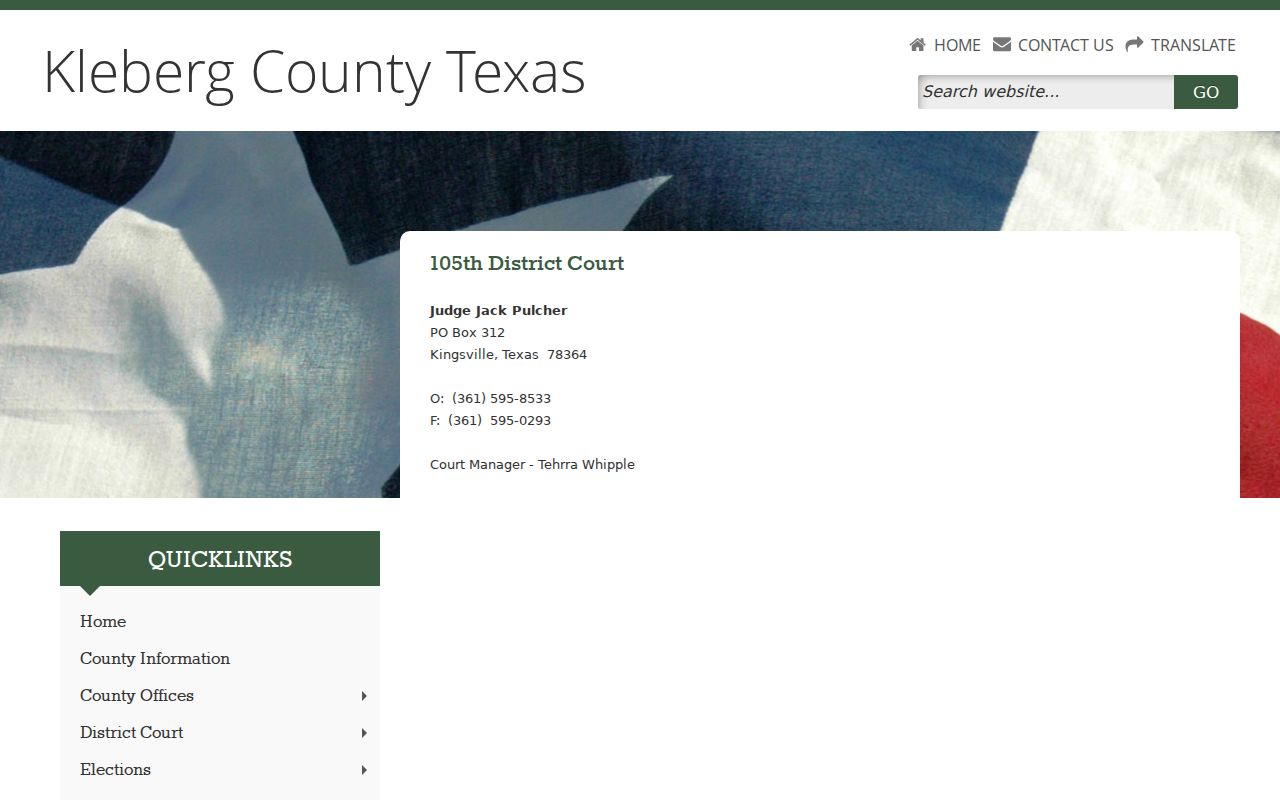
Kleberg County's District Court page posts the felony court's contact information. Reach the court or the District Clerk there with a case-record question.
Inside a Kleberg County Arrest Warrant
A warrant is supposed to name the person or give a reasonably definite description. It must also state the offense and carry the magistrate's signature and office. Kleberg County publishes no sample warrant number, bond schedule, or full field list. The issuing clerk holds the actual case details.
| Warrant Number | Issuer-specific; format not published in the researched public sources. |
|---|---|
| Named person | Name or reasonably definite description under Texas procedure. |
| Charge / Offense | Offense stated in the magistrate's written order. |
| Issuing Judge / Court | Authorized magistrate and the court holding the case. |
| Bond / Bail Set | Confirm amount and type with the court or jail. |
| Date Issued | Ask the clerk for the issue date and current status. |
Kleberg County Arrest Warrant Booking Sequence
Once an arrest happens, the Detention Center handles screening, fingerprints, photographs, database entry, holding, and magistrate review. Booking itself takes place at the Law Enforcement Center. The Sheriff's Office puts the average wait before magistration at around twelve hours, though the span can reach twenty-four hours depending on when a person enters custody. Those are estimates, not a release guarantee. The inmate roster lists a booking number, which is not a warrant number. A booking entry can show custody details in Kleberg County while the underlying court case is still pending.
Serving Arrest Warrants in Kleberg County
Several hands can touch a Kleberg County arrest. The sheriff, the Kingsville Police Department, constables, DPS, task-force officers, and other agencies may all make arrests or handle transport. The county runs no separate warrant unit and names no single officer for every service. A call to the county can route a service question, but the issuing court still controls the case. After the warrant is executed, detention staff manage booking and magistrate routing. If bond is available, the court or jail sets the amount and conditions. Release does not erase the charge, and future court dates in Kleberg County still stand.
Kleberg County Warrant Service Roles
Law enforcement in Kleberg County is spread across agencies. A sheriff's deputy can execute county process, Kingsville police handle city cases, and a JP may issue local magistrate orders. No unified service roster or current warrant caseload is published. The Texas Judicial Branch trial-courts overview explains how the state's trial courts fit by level, which helps place a local file. Match the court name on the cause document to find the clerk who holds the case record you need.

The Texas Judicial Branch page lays out the statewide court structure. Kleberg County files route through that same framework of trial-court levels.
Comparing Arrest, Summons, and Bench Warrants
Three tools do different jobs. An arrest warrant authorizes custody after a probable-cause review. A summons directs a person to appear in court without an immediate arrest. A bench warrant follows a missed court obligation. Each type comes from its own issuing court and calls for its own response, so a bench warrant should be handled through the Kleberg County court that set the original case.
| Feature | Arrest Warrant | Summons | Bench Warrant |
|---|---|---|---|
| What It Orders | Take the named person into custody. | Appear at a stated date or time. | Return to court after a missed obligation. |
| Basis | Probable cause stated in a complaint. | A required appearance in a case. | Failure to appear, pay, or comply. |
| Who Issues It | Authorized judge or magistrate. | Court or authorized process officer. | Judge handling the pending case. |
| How to Respond | Ask counsel about court, surrender, and bond. | Appear as directed. | Ask issuing court about recall or reset. |
Kleberg County Warrant Bond and eBONDS
The Sheriff's Office describes an online cashless bond option at bail.cash/klebergtx. Kleberg County posts no bond schedule, no warrant-specific form, no counter hours, and no blanket eligibility rules. Before using any payment route, confirm the case, the amount, payer requirements, and release conditions with the court or the Detention Center. Keep in mind that cash, surety, and personal-recognizance release work differently. Bond is security for coming back to court; posting it does not dismiss the underlying matter.
If There's an Arrest Warrant for You
Have an attorney contact the issuing court and confirm the order before arranging any appearance. The court may require a motion to recall or quash, a voluntary surrender, a bond, or a new setting. Kleberg County promises no walk-in window or same-day processing. Keep every receipt, release paper, and notice of the next date.
Important: Consult counsel before surrender or payment; an active arrest order can be served during law-enforcement contact, and local walk-through availability is not guaranteed.
Federal Warrants Outside Kleberg County
Federal cases take a different route than anything in Kleberg County. The Southern District of Texas Corpus Christi Division handles federal matters for the area. No local sheriff can recall a federal warrant, so your warrant search has to run through the federal court itself. Sealed dockets may look thin. Confirm the issuing jurisdiction with counsel before you act on anything. Skip the city citation portals and inmate rosters; they answer to different courts and will not resolve a federal case. The U.S. District Court's Corpus Christi Division page posts the official division information, including courtroom locations and contact details for the federal courthouse.
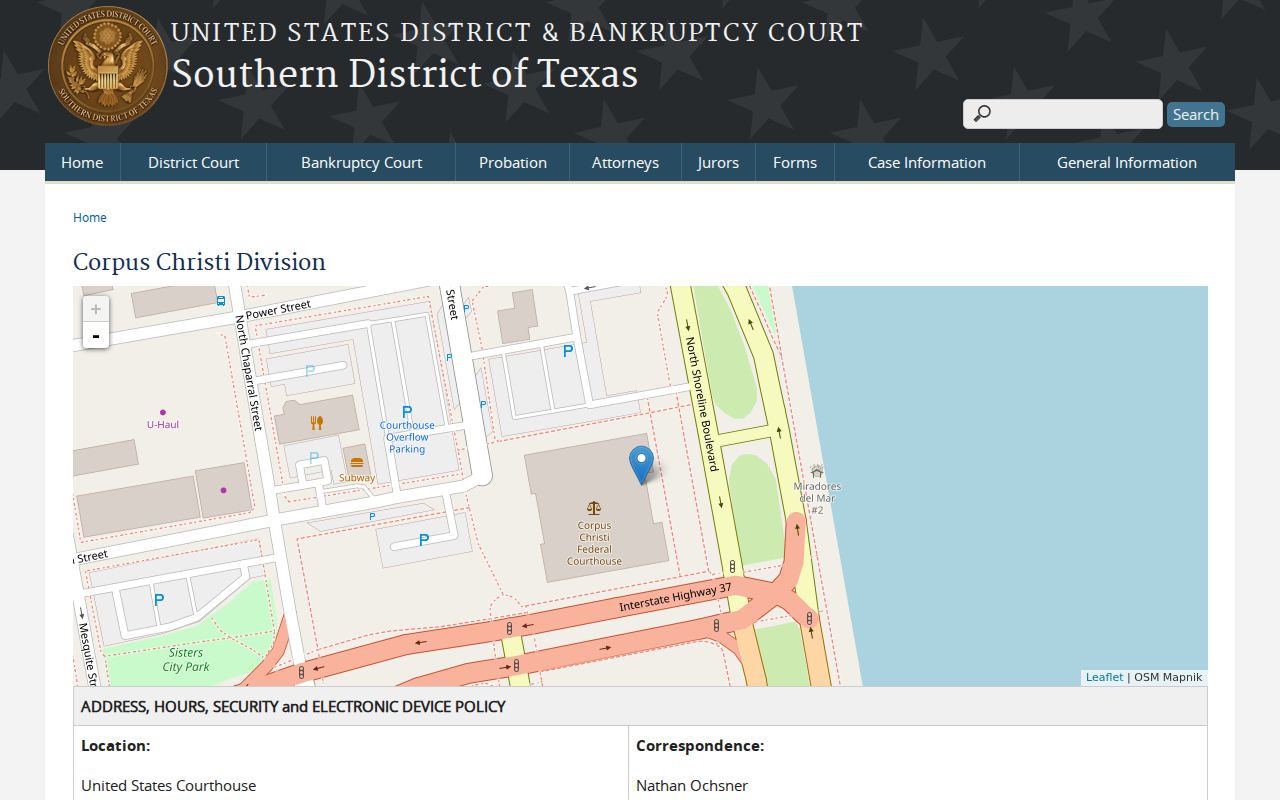
The federal court's official division page is the source for this Kleberg County arrest-warrant image. It marks the separate federal route.